
Port of San Diego’s Blue Economy Incubator Grows to 15 Companies with Ocean Ecostructures
Contact: Gabriella Rodriguez, 619.904.2137, grodriguez@portofsandiego.org
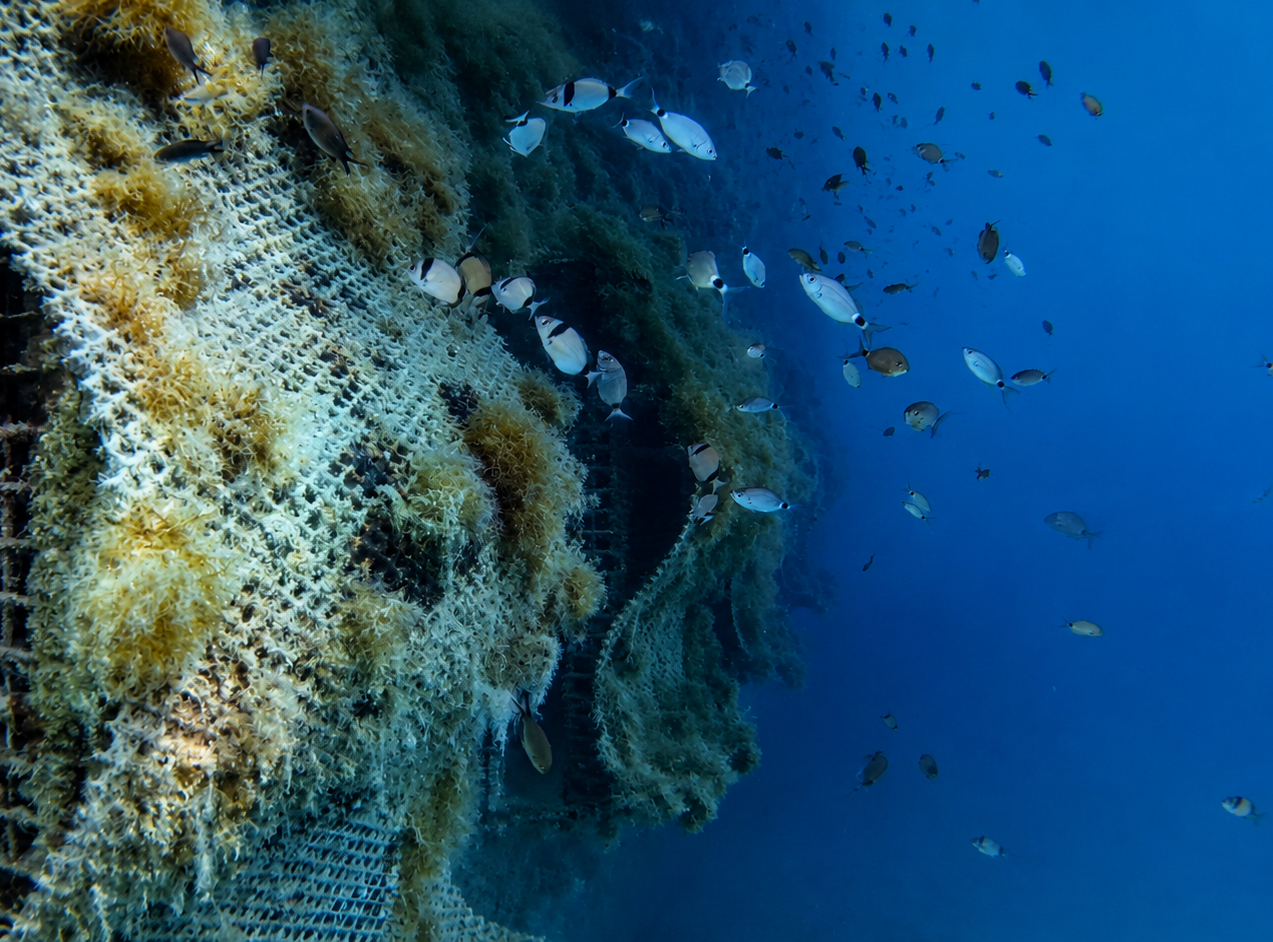
The Port of San Diego Board of Port Commissioners has approved a new Blue Economy Incubator (BEI) pilot project with Ocean Ecostructures that has the potential to increase biodiversity in San Diego Bay. As a leader of the region’s blue economy, the Port established its Blue Economy Incubator in 2016 as a launching pad for sustainable, ocean-based technology ventures. This latest addition marks the 15th pilot project launched by the BEI since its inception and is another bold step toward building a resilient, sustainable and innovative blue economy that serves the San Diego region by creating a new pipeline of ocean-positive businesses.
Ocean Ecostructures has developed a way to jump-start marine life on human-made ocean structures. The startup's biodiversity regeneration technology intends to enhance biodiversity at ports and measure their environmental impact without disrupting daily operations. This work aligns with the Port's role as the environmental champion of San Diego Bay.
“Innovation and sustainability are leading the way in protecting the vital resource that is San Diego Bay,” said Chair Ann Moore, Port of San Diego Board of Port Commissioners. “As champion of San Diego Bay, the Port continues to show its commitment to access to the waterfront for all through our Blue Economy Incubator program.”
The agreement with Ocean Ecostructures is capped at $208,000 in exchange for royalties on future gross revenues of up to $1.25 million. The two-year pilot project will be deployed in multiple locations throughout San Diego Bay and monitored for effectiveness.
“We’re proud to partner with the Port of San Diego through its Blue Economy Incubator,” said Ignasi Ferrer, CEO and Co-Founder of Ocean Ecostructures. “After deploying our technology across Europe and the Middle East, this collaboration marks an important milestone in our expansion into the U.S. market. It gives us the opportunity to demonstrate in San Diego how marine infrastructure can actively contribute to restoring ocean biodiversity, generating measurable environmental and socioeconomic impact that can be translated into tangible corporate value. We see this as a strong foundation for scaling our solution across U.S. ports and beyond.”
To date, the Board of Port Commissioners has approved a total of 15 agreements with early-stage companies, including one re-investment, to launch innovative pilot projects. Aside from the newest addition to the BEI, the following are active BEI projects:
-
PortXchange: PortXchange is an award-winning for-profit business committed to transforming port operations through digital innovation and sustainability. Their product, EmissionInsider Carbon Insights Suite, is an emissions and reporting platform providing real-time emissions intelligence that help ports improve operational efficiency, reduce vessel emissions, and accelerate decarbonization through data-driven decision making. The EmissionInsider platform has been recognized as one of Europe’s leading digital innovations for port decarbonization.
-
Lux Bio: Lux Bio is a for-profit venture pioneering a safer, cleaner alternative to conventional glow sticks. Glow sticks are a long-standing source of marine pollution and an everyday tool used in fishing, emergency response, defense, and public events. Lux Bio’s product replaces toxic chemicals and single-use plastics with a bioluminescent, non-toxic, and ocean-biodegradable lighting solution. For the Port of San Diego, investing in Lux Bio supports its core mission to protect the bay’s health while advancing practical innovation that serves working waterfront industries and public safety needs.
-
VoltSafe: VoltSafe is an electrification startup bringing next-generation marina shore power and smart marina technology to San Diego Bay. VoltSafe aims to make the Port’s marinas safer and more efficient with their new shore power system that ditches the traditional pronged plug and replaces it with a magnetic connection. Magnetic technology reduces the risk of electrical shocks, corrosion, and other hazards that come with water and power mixing. The system also comes with smart software that gives marina operators a real-time look at what’s happening at each slip – from power usage and disconnections to leaks and peak demand.
-
MarineLabs: MarineLabs is a scale-up coastal intelligence company specializing in providing real-time coastal domain awareness and climate resilience data from sensor nodes that can help the Port make informed decisions about its coastal resilience projects and operations. MarineLabs’ technology focuses on providing persistent wave, wind, and wake data above the water’s surface and complements another BEI company, HyperKelp, whose buoy platforms collect data on underwater noise and water chemistry.
-
HyperKelp Inc: HyperKelp is an early-stage company specializing in the custom development of smart buoy platforms (known as Kelp Smart Buoy). The buoy platforms can collect and aggregate underwater data in near real-time and display results on an online dashboard. This technology monitors underwater noise levels, atmospheric carbon dioxide concentrations, and water quality. This project has earned local and national news coverage including a segment on Spectrum News 1.
-
FREDsense: FREDsense Technologies is working to develop a portable five-in-one field-testing sensor device to provide near real-time metals analysis for stormwater monitoring. Under this pilot project, FREDsense is developing a prototype to demonstrate the feasibility of automatically testing levels of aluminum, copper, lead, zinc, and nickel – all of which are of importance for stormwater compliance monitoring.
-
Sunken Seaweed: Sunken Seaweed, an aquaculture start-up company led by two marine ecologists, joined the Port’s BEI to demonstrate the feasibility of seaweed aquaculture in San Diego Bay. Sunken Seaweed established a seaweed hatchery at San Diego State University’s Coastal and Marine Institute Laboratory and installed their submerged seaweed pilot farm using Port docks and piers. Since 2018, the company has been successfully cultivating, out planting, growing, monitoring, and harvesting several species of seaweed native to Southern California. Beyond commercialization, results from the pilot project help assess and quantify seaweed aquaculture’s multiple co-benefits, from carbon sequestration and bioremediation to improving water quality and ecosystem productivity. In 2022, the Port reinvested in an expansion of Sunken Seaweed's pilot which enables the company to build and continue its research in San Diego Bay, while expanding operations to Humboldt Bay where they benefit from shoreside facilities to help them reach market scale. This project was featured in the TODAY Show’s Earth Week coverage for NBC Climate in April 2023.
-
San Diego Bay Aquaculture: Since 2017, San Diego Bay Aquaculture is testing if a shellfish nursery, called a FLUPSY (Floating Upweller System), can be effective in helping address a coast-wide shellfish seed shortage. The FLUPSY is a floating barge that circulates water through compartments or bins holding shellfish, in this case oysters, as they grow from about the size of a red pepper flake to about the size of a quarter. After being in the FLUPSY, the shellfish are transported to a farm where they grow to market size. The project was one of two BEI projects featured in the TODAY Show’s Earth Week coverage for NBC Climate.
The Port of San Diego is committed to the development of a sustainable ocean economy and to exploring new opportunities that deliver multiple social, environmental, and economic co-benefits to the Port and the region. In exchange for funding or in-kind support provided to launch the pilot projects, the Port receives royalties from the businesses’ operations or technology. To date, the Port has committed approximately $3.4 million in funding, has attracted millions in outside funding including federal and state dollars for blue economy initiatives, provided access to and use of Port-owned property, and assisted with obtaining all necessary regulatory and operational permits, coordinated the installation of pilot projects, and collaborated on marketing and communications.
Throughout the program, the Port has received multiple awards recognizing its unique approach to port-based blue economy innovation through pilot project facilitation and has been recognized by state and federal agencies, industry, and academia for providing pathways for the sustainable development of aquaculture and blue technology in the region. Learn more about the Port of San Diego’s BEI and read the latest highlights report at portofsandiego.org/blueeconomy.
ABOUT THE PORT OF SAN DIEGO
The Port of San Diego serves the people of California as a specially created district, balancing multiple uses on 34 miles along San Diego Bay spanning five cities. Collecting no tax dollars, the Port manages a diverse portfolio to generate revenues that support vital public services and amenities.
The Port champions Maritime, Waterfront Development, Public Safety, Experiences and Environment, all focused on enriching the relationship people and businesses have with our dynamic waterfront. From cargo and cruise terminals to hotels and restaurants, from marinas to museums, from 23 public parks to countless events, the Port contributes to the region’s prosperity and remarkable way of life on a daily basis.