
Port of San Diego Officials Urge the Public to Be Aware of Intermittent Street Flooding Near the Waterfront Due to Elevated King Tides
Contact: Gabriella Rodriguez, 619.904.2137, grodriguez@portofsandiego.org
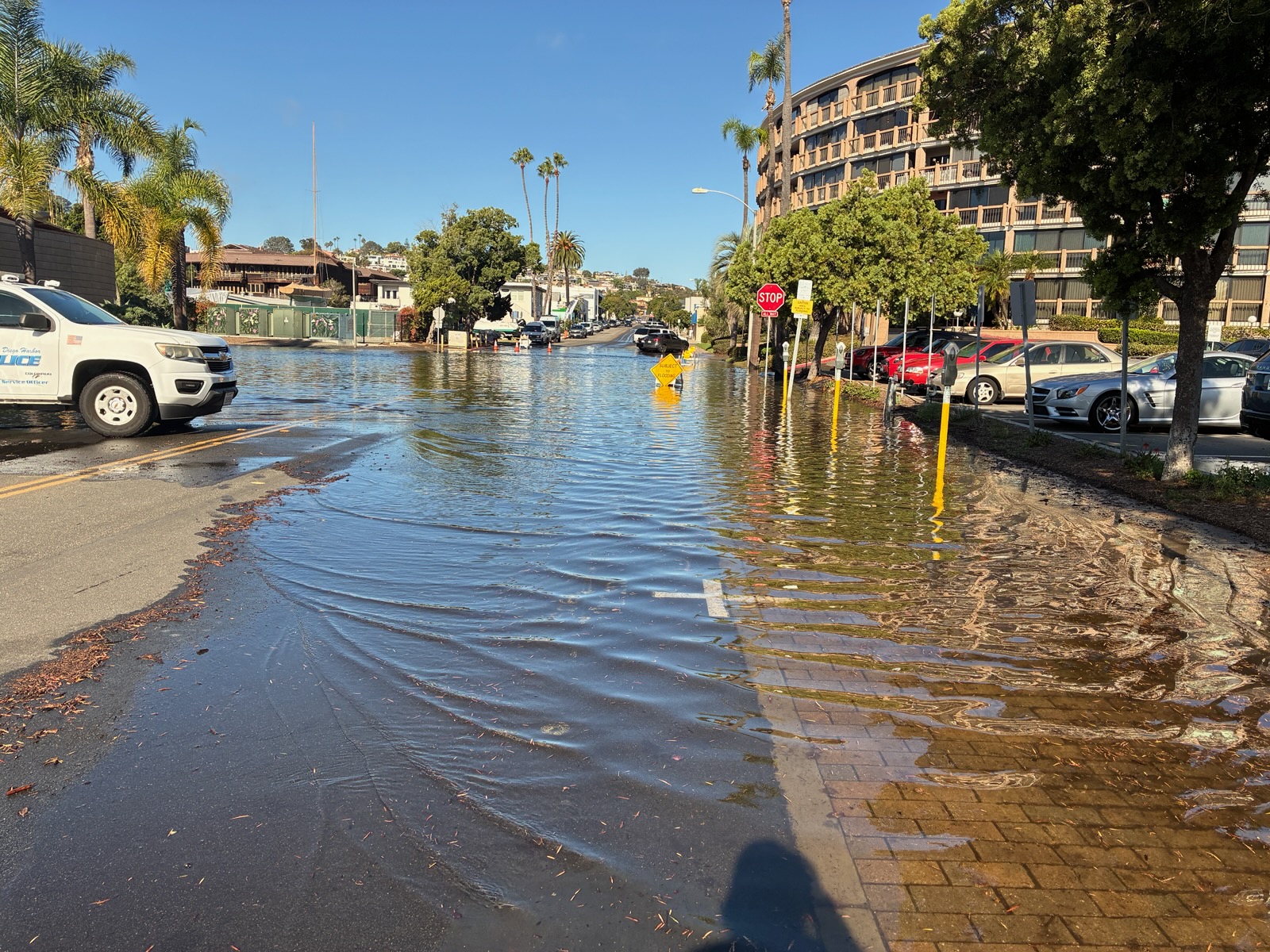
The Port of San Diego is advising the public to prepare for intermittent street flooding along portions of the San Diego Bay waterfront, including sections of Harbor Drive and other low-lying areas, as elevated tide levels are expected to coincide with Kelvin waves, seasonal high tides, and forecasted rainfall.
The National Weather Service has issued a coastal flooding advisory, and the Port has already seen impacts from high tides. On October 26 and 27, sections of the bayfront experienced dry weather flooding which caused the temporary closure of a section of West Harbor Drive between Market and Front Streets. The street reopened an hour later when water levels receded. Although flooding is expected to be temporary, elevated water levels may overtop seawalls, flood roadways, limit access to waterfront areas, disrupt traffic and create hazards for pedestrians, bicyclists and motorists.
General caution should be implemented during the high tides. Some bayfront areas most vulnerable to flooding include:
-
Embarcadero: North Harbor Drive and Laurel Street; West Harbor Drive and Kettner Boulevard; and West Harbor Drive between Market and Front streets
-
Embarcadero Marina Park North: Walkway near the marina and parking lot entrance
-
Downtown San Diego: Pacific Highway and Laurel Street
-
Point Loma: Anchorage Lane and Canon Street
-
Bayshore Bikeway: South San Diego Bay between State Route 75 and Flamingo Trail
During its October 13, 2026, meeting, the Board of Port Commissioners declared a local emergency to support efforts to prepare for, respond to and recover from anticipated storm impacts in coordination with local, regional, state and federal partners.
In addition to the declaration, the Port is taking a proactive approach to prepare for potential El Niño-related impacts, including:
-
Coordination with adjacent cities on flood control and emergency management
-
Inspecting storm drains maintained by the Port
-
Increasing monitoring of areas prone to flooding
-
Conducting proactive tree maintenance
-
Installing backflow preventers in storm drain outfalls
-
Ensuring best management practices are implemented at construction sites
The Port encourages the public to:
-
Call 911 to report perceived public safety hazards or emergency situations. Be prepared to provide dispatchers with the location and details of what you are observing.
-
Exercise caution when traveling along waterfront roadways during high-tide periods.
-
Never drive through standing water.
-
Allow extra travel time when visiting bayfront destinations during peak high-tide events.
-
Follow all posted signs, traffic controls and temporary closures.
-
Secure trash and outdoor items and properly dispose of debris to help prevent storm drains from becoming obstructed.
-
Report clogged storm drain inlets or hazards around the waterfront to the Port using the Port’s Service Portal at portofsandiego.org/about-port-san-diego/service-portal
-
Monitor local weather and tide forecasts via emergency alert services like Alert San Diego before heading to waterfront locations.
Port staff and the Port of San Diego Harbor Police Department will continue to monitor conditions and coordinate with partner agencies throughout the elevated tide period and through the El Niño season. Information about significant impacts or closures will be shared through the Port and Harbor Police Department’s social media channels as needed.
ABOUT THE PORT OF SAN DIEGO
The Port of San Diego serves the people of California as a specially created district, balancing multiple uses on 34 miles along San Diego Bay spanning five cities. Collecting no tax dollars, the Port manages a diverse portfolio to generate revenues that support vital public services and amenities.
The Port champions Maritime, Waterfront Development, Public Safety, Experiences and Environment, all focused on enriching the relationship people and businesses have with our dynamic waterfront. From cargo and cruise terminals to hotels and restaurants, from marinas to museums, from 23 public parks to countless events, the Port contributes to the region’s prosperity and remarkable way of life on a daily basis.
ABOUT PORT OF SAN DIEGO PUBLIC SAFETY
Port of San Diego Public Safety protects and oversees the safety of our dynamic San Diego Bay waterfront—land and sea.
Port Public Safety is responsible for safeguarding waterfront parks and land, maintaining homeland security and collaborating with agency partners to deter crime locally and abroad. Through the Harbor Police Department, the Port provides for the safety of our communities and resources along San Diego Bay and at San Diego International Airport, and is seen as a global leader in maritime and aviation public safety.