Port of San Diego Certifies EIR and Authorizes CDP for Proposed Skycharger Electric Truck Hub
Contact: Brianne Mundy Page, 619.348.1518, bpage@portofsandiego.org
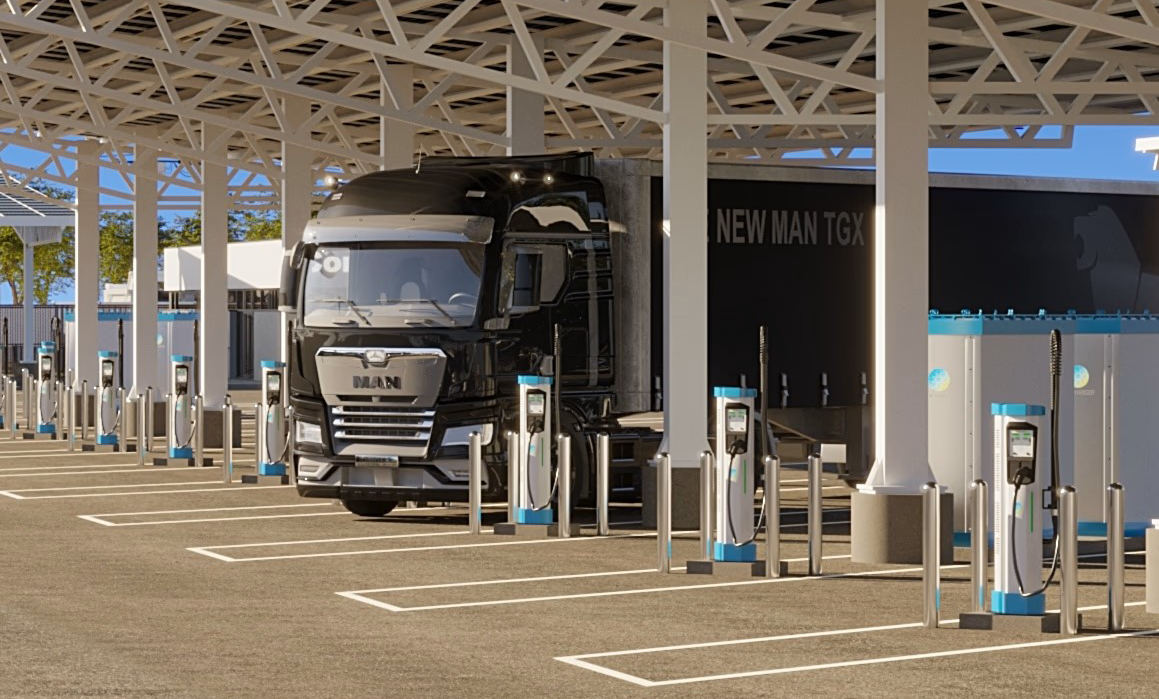
The Port of San Diego Board of Port Commissioners has certified the Environmental Impact Report (EIR) and has authorized issuance of a Coastal Development Permit (CDP) for the Tidelands Avenue Electric Truck Hub proposed by Skychargers, LLC (Skycharger). The Board has also authorized staff to sign a non-binding Term Sheet with Skycharger as lease negotiations continue. The proposed electric truck hub would support the Port’s Maritime Clean Air Strategy (MCAS), a program that is significantly reducing diesel pollution from maritime and industrial operations in and around the Port. As a result, all communities around San Diego Bay are experiencing improved air quality.
“Projects like this reflect our continued commitment to cleaner air and a healthier San Diego Bay for everyone,” said Chair Ann Moore, Port of San Diego Board of Port Commissioners. “By advancing zero-emissions infrastructure and supporting the transition to cleaner technologies, we are improving air quality on and around the bay while creating opportunities for more people to safely access and enjoy our waterfront.”
“This project is an investment in the public health of our community and in the future we want to build together,” said Commissioner GilAnthony Ungab, M.D., Port of San Diego Board of Port Commissioners. “I am proud of and deeply appreciative of the community members who have been engaged throughout this process. Their input has been critical to helping shape a project that gives us an opportunity to move toward a cleaner, healthier future while supporting the economic activity, jobs, and industries that are so important to our region.”
“We're proud to reach this milestone and grateful to the Port Commissioners and the community members who have shaped our project with their input and engagement over the past three years,” said Andy Karetsky, Skycharger CEO. “Our charging facility will help jumpstart the transition to electric trucks at the Port, delivering cleaner air to the communities that have borne the brunt of diesel pollution for too long. We believe this project can be a model for how the freight industry moves forward. We're committed to being a good partner to the Port and National City community and look forward to breaking ground."
Proposal Details
In March 2024, the Board selected Skycharger through a competitive RFP process to develop a project to build and operate an approximately 4.8-acre zero-emissions (ZE) truck charging station. As proposed, the facility would have 70 charging ports of varying levels to support opportunity and overnight charging. Planned amenities include a convenience store and a restroom facility. The proposed project site is at 19th Street and Tidelands Avenue near the National City Marine Terminal on an industrial site that is along an existing designated truck route with no residential neighbors. The site was selected after a multi-year process that included public input. The station is intended to primarily serve trucks visiting the Port’s two marine cargo terminals.
To ensure energy reliability and operational resiliency, Skycharger is proposing a 1,719-kW solar array with a 1.9 MW/7.8 MWh (power rating/energy capacity) battery system for its distributed energy resources. Skycharger is also developing a Trucking as a Service (TaaS) program. The TaaS business model helps truck owners adopt ZE trucks without large upfront capital investments. The TaaS program would include a 90-day “try before you buy” program and a five-year path to ownership.
EIR, CDP and Term Sheet
The Port published a Draft EIR for public review and input on January 29, 2026. The EIR analyzed the potential environmental effects of the proposed project related to air quality, energy, hazardous materials, hydrology and water quality, noise, and transportation. The EIR analysis concluded that the proposed project would not result in any significant environmental impacts, therefore no mitigation measures are required. Although no mitigation measures are required, several project conditions related to truck route enforcement, hazard mitigation, stormwater pollution prevention, lighting, emergency response, and tribal cultural monitoring have been developed and are included in a Monitoring and Reporting Program (MRP). The project conditions are also integrated as special conditions of the CDP. The Board of Port Commissioners certified the Final EIR on August 11, 2026.
Port staff continue to engage with Skycharger on lease negotiations, resulting in a non-binding Term Sheet that includes a proposed lease term of 20 years with one, five-year option to extend. Proposed rent includes a combination of annual flat rent plus percentage rent based on gross sales of the project. The Term Sheet also includes a significant community benefit contribution by Skycharger: $150,000 per year through the entire lease term. Staff and Skycharger continue to work through the specific details of the community benefit plan, which would be memorialized in a future lease agreement.
Next Steps
Staff will continue to negotiate lease terms with Skycharger with the goal of bringing a lease agreement to the Board for review and consideration in the coming months. Construction cannot begin until a lease is executed and other building permits are secured.
Maritime Clean Air Strategy (MCAS)
The Port is committed to cleaner air for everyone who lives, works, and plays on and around San Diego Bay. In October 2021, the Board of Port Commissioners approved the Maritime Clean Air Strategy (MCAS) to help the Port identify projects and initiatives to improve environmental and public health while also supporting efficient, modern and sustainable maritime operations. Its “Health Equity for All” vision represents the Port’s commitment to environmental justice, technological innovation, and transparent governance. The MCAS is the most ambitious clean air strategy policy document of its kind in the State of California, and the Port has so far implemented two-thirds of the nearly 40 strategies outlined in the plan, resulting in significant improvements to air quality on and around the bay and in surrounding communities.
In support of the MCAS, the Port and various partners have invested or committed $240 million in clean air technologies and projects. Notable among these initiatives include:
- The Port of San Diego is the first in North America to have all-electric mobile harbor cranes, which are in operation at the Port’s Tenth Avenue Marine Terminal. The Konecranes Gottwald Generation 6 mobile harbor cranes have replaced an obsolete diesel mobile harbor crane.
- The first all-electric harbor tugboat in the U.S., built and operated by Crowley, began operating in San Diego Bay in spring 2024.
- A new solar-powered microgrid is online at the Tenth Avenue Marine Terminal.
- A maritime emissions capture and control system (also known as a bonnet) at the Port’s cargo terminals began operating in 2025.
- Shore power installation at the National City Marine Terminal, and additional shore power capability added at the Port’s cruise terminals.
- Port fleet electrification.
- Tenant electrification:
- Terminalift – electric reach stacker, forklifts, and semi-trucks.
- SSA Marine – six new pieces of electric cargo handling equipment, including a recently deployed forklift.
- Pasha – first all-electric car haulers in the U.S.
- Dole – first on the West Coast to use battery-electric utility tractor rigs (UTRs) for cargo handling.
- Marine Group Boat Works – converted a diesel tugboat to electric.
Skycharger Background
Established in 2013, Skycharger submitted a proposal to the Port in partnership with Burns & McDonnell and Skyview Ventures. Skyview Ventures is the financing partner responsible for all costs related to financing, design, procurement, installation, operation, and maintenance.
Skycharger has experience building ZE infrastructure for the West Coast Electric Highway DC fast charger network, which is the fourth largest charging network in California, and recently constructed the PepsiCo LA Mega Facility in Torrance, California. Burns & McDonnell has been providing energy consulting and electrical engineering services to the Port under an as-needed energy services contract since 2016.
ABOUT THE PORT OF SAN DIEGO
The Port of San Diego serves the people of California as a specially created district, balancing multiple uses on 34 miles along San Diego Bay spanning five cities. Collecting no tax dollars, the Port manages a diverse portfolio to generate revenues that support vital public services and amenities.
The Port champions Maritime, Waterfront Development, Public Safety, Experiences and Environment, all focused on enriching the relationship people and businesses have with our dynamic waterfront. From cargo and cruise terminals to hotels and restaurants, from marinas to museums, from 23 public parks to countless events, the Port contributes to the region’s prosperity and remarkable way of life on a daily basis.
ABOUT PORT OF SAN DIEGO ENVIRONMENT
Port of San Diego Environment champions the safekeeping and environmental care of our diverse ecosystems. Year after year, environmental goals are set and measured to evolve environmental initiatives – ensuring San Diego Bay remains a vibrant resource and contributes to a remarkable way of life for visitors and residents for generations to come.