Aquaculture in and around San Diego Bay
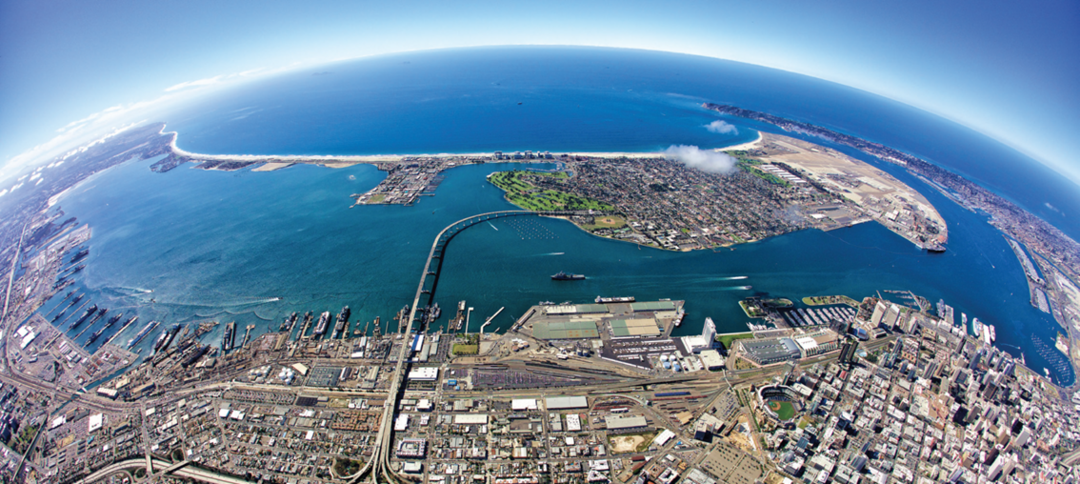
The Port of San Diego is actively advancing aquaculture through the practice of growing seaweed and/or shellfish in aquatic environments in and around San Diego Bay. San Diego Bay and surrounding areas have several characteristics supportive of shellfish and seaweed aquaculture, including a temperate climate, proximity to markets, and existing shore-side infrastructure.
Shellfish and seaweed aquaculture can provide sustainable commercial opportunities in multiple areas, including food production, biofuel, bioplastics, and other alternative materials. When properly planned, managed, and operated, shellfish and seaweed aquaculture can co-exist with other maritime functions and provide many benefits such as improving water quality, habitat enhancement, carbon sequestration, and ecosystem restoration.
San Diego Bay and its surrounding environment has the potential to support a growing and viable shellfish and seaweed aquaculture businesses that also aligns with the Port’s mission, advances science, and grows a new industry sector with strong potential for job creation and related economic and environmental benefits for the region.
Get more information on the Port’s Aquaculture planning and predevelopment studies.
Shellfish and Seaweed Aquaculture Program (SSAP)
The Port is proposing to develop a Shellfish and Seaweed Aquaculture Program (SSAP) and is looking for the public’s input on plans to establish three in-water and three landside aquaculture operation locations. The SSAP provides a framework for the Port to guide, consider and approve future shellfish and seaweed aquaculture activities through the program.
Proposed Locations
The SSAP identifies three in-water locations and three landside locations where shellfish and seaweed aquaculture activities could occur.
In-Water Locations
- Up to 152 acres of open ocean areas west of Imperial Beach
- Up to 80-acres west of the National City Marine Terminal formally designated as the Former A-8 Anchorage
- Up to 598 acres of nearshore open-ocean area, currently outside of the District’s jurisdiction, known as Zuñiga Shoals, south of Zuñiga Jetty
Initial Landside Locations
- Existing infrastructure at CP Kelco, located on the eastern shore of San Diego Bay, southeast of the Coronado Bridge
- A gravel lot adjacent to, and outside the Tenth Avenue Marine Terminal
- Currently vacant warehouse at the National Distribution Center, located just east of the National City Marine Terminal and Pasha Automotive Services
Shellfish and Seaweed Aquaculture Program (SSAP) Discussion Draft
As a port of communities, we are looking to community members and stakeholders to provide feedback on the Port’s proposed SSAP. Comments, data, and discussions on potential opportunities or gaps in the preliminary SSAP are all welcome.
After the First Discussion Draft comment period closed on October 25, 2024, Port staff reviewed the comments and prepared an updated draft of the SSAP.
A Second Discussion Draft was released on May 1, 2026, for a 45-day public review period. The comment period closed on June 15, 2026, and Port staff are currently reviewing the comments received. The process to develop the SSAP is designed to be iterative and responsive to feedback, and this process will likely continue to evolve as the SSAP evolves.
CLICK HERE TO REVIEW THE SSAP SECOND DISCUSSION DRAFT
HAGA CLIC AQUI PARA LEER EL BORADOR DEL SSAP
CLICK HERE TO REVIEW A SUMMARY OF THE DISCUSSION DRAFT
CLICK HERE TO REVIEW THE SECOND DISCUSSION DRAFT WITH TRACKED CHANGES
Aquaculture Pilot Projects and the
Blue Economy Incubator
The Port is taking an active leadership role in expanding the domestic aquaculture industry and facilitating early development of regional marine aquaculture projects by investing in two aquaculture businesses through its Blue Economy Incubator.
Sunken Seaweed
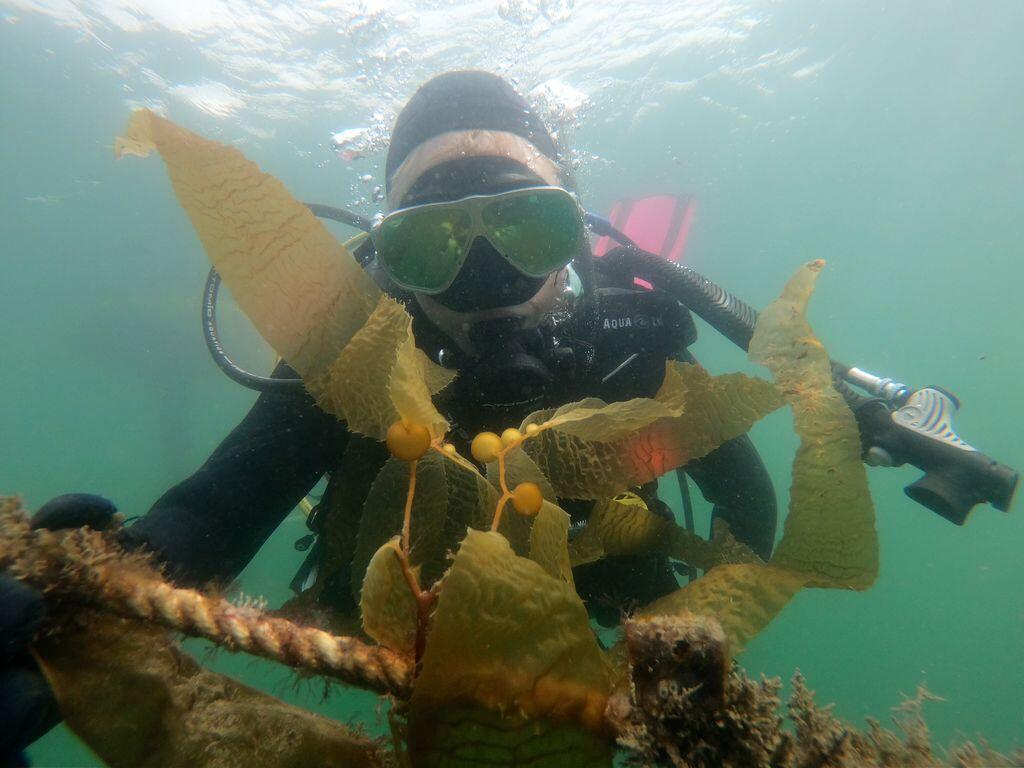
Sunken Seaweed is a seaweed farm located at the northwestern end of Grape Street Pier and is made up of a rectangular grid system in which various seaweeds species are being grown in the San Diego Bay. The seaweed grown can be used for consumption, fuel, feed, and even packaging. In 2023, Sunken Seaweed was featured on the TODAY Show’s Earth Week coverage and on NBC’s show Lx.
CLICK HERE TO SEE SUNKEN SEAWEED ON LX
San Diego Bay Aquaculture
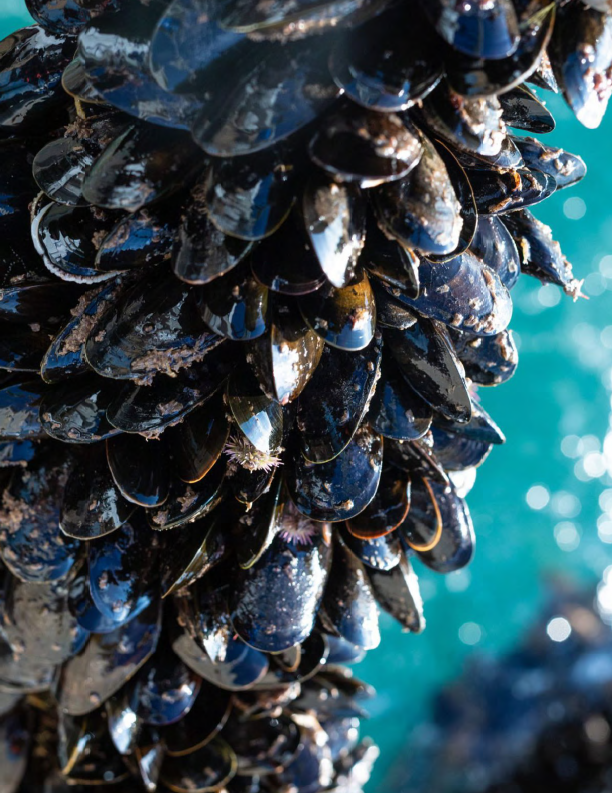
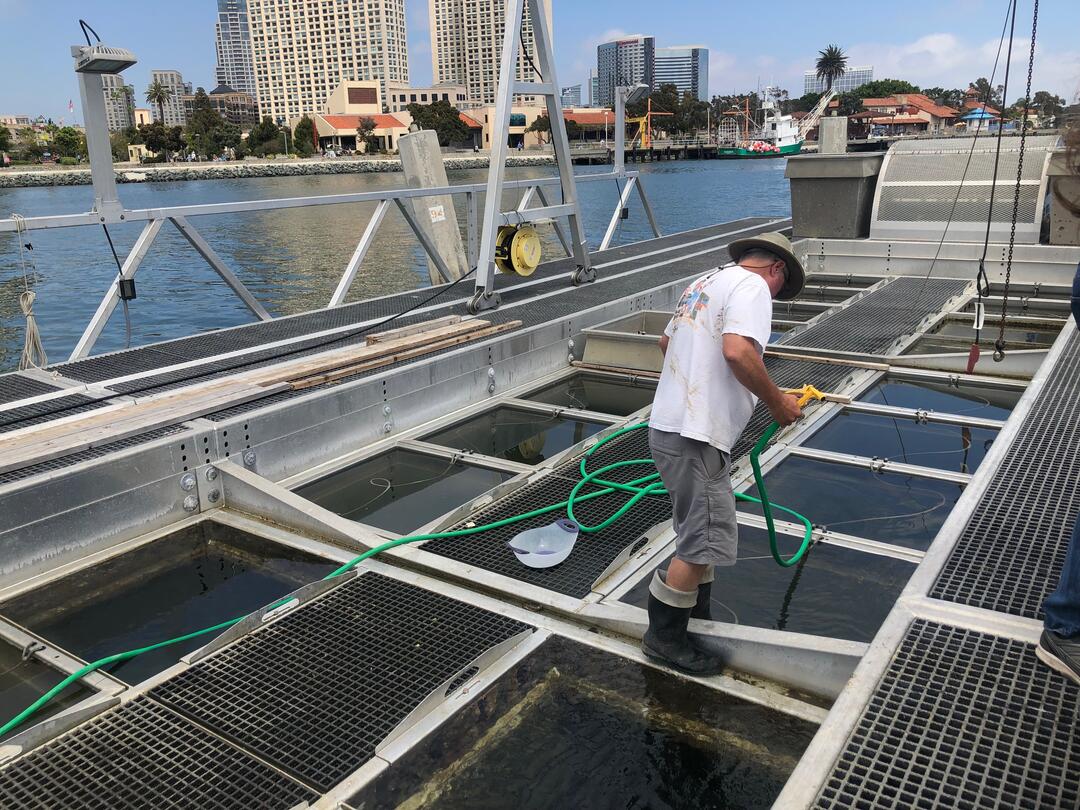
San Diego Bay Aquaculture grows Pacific oysters from seeds the size of pepper flakes to juvenile stage, or about the size of a quarter. Once at juvenile stage, the oysters will be exported to farms for further grow out. In 2023, TODAY Show co-host Al Roker toured San Diego Bay Aquaculture operations and featured them on his Earth Week coverage.
CLICK HERE TO SEE SAN DIEGO BAY AQUACULTURE ON THE TODAY SHOW
Aquaculture Timeline
Aquaculture & Blue Technology Department created
Blue Economy Incubator (BEI) established
- September 2017: Began preliminary studies with National Oceanic and Atmospheric Administration, National Ocean Service, and National Centers for Coastal Ocean Science (NOAA-NOS-NCCOS)
- June 2017: San Diego Bay Aquaculture BEI agreement approved
- November 2017: FLUPSY installed at G St Mole for San Diego Bay Aquaculture
Sunken Seaweed BEI agreement approved
Sunken Seaweed farm installed at Grape Street Pier and hatchery installed at SDSU CMIL
Received Builder’s Initiative funding to prepare the Shellfish and Seaweed Aquaculture Program
Sunken Seaweed re-investment to Humboldt Bay approved
January 2024: One of the NOAA-NOS-NCCOS studies was published in Frontiers in Marine Science
July 9, 2024: Presentation to the Board of Port Commissioners on preparing a Discussion Draft to establish the Shellfish and Seaweed Aquaculture Program
August 20, 2024: Shellfish and Seaweed Aquaculture Program Discussion Draft published for public review and input
October 25, 2024: Public comment period for the first discussion draft closed
May 1, 2026: Shellfish and Seaweed Aquaculture Program Second Discussion Draft published for public review and input
June 15, 2026: Public comment period for the second discussion draft closed
CLICK HERE TO REVIEW THE SECOND DISCUSSION DRAFT WITH TRACKED CHANGES
Aquaculture & Blue Technology Department
The Port established the Aquaculture & Blue Technology Department recognizing the growth opportunities of the Blue Economy sector and its strategic position within the world’s leading blue technology clusters.
Aquaculture is the practice of growing plants and/or animals in aquatic environments. This can occur in fresh or salt water and it can be done for food production or for other purposes such as alternative fuel, packaging, bioremediation, and fertilizers.
Blue technology is the advanced technology sector of the maritime industry, which drives sustainable innovation across emerging markets of the Blue Economy. It includes a broad spectrum of industries and innovative technologies focused on promoting sustainable ocean activities.
The Port is taking an active leadership role in the development of sustainable aquaculture and blue economy opportunities.